Author: nickw@beekeeping.co.nz

  • 1915

    While the NBA did not take up Major Norton’s offer, the NZ Co-op Honey Producers’ Association did. Possible returns of 5d per pound, £46 per ton, were talked of. The HPA agreed to increase authorised capital to £3000 and accept other shareholders, enabling it to enter into the contract with the Bristol and Dominion Producers’ Association in 1915 to supply 100 tons of first-grade honey per year for a period of three years.

    Patriotic beekeepers were urged to contribute honey for “the distressed poor of the Homeland” early in the year.

    In 1915 the grading regulations became compulsory. Exports increased, and the ‘respectability’ of the product led to confidence and increased prices on the local market.

    Mr JS Cottrell (Te Aroha) was elected President at the 1915 Conference in Wellington, with Mr J Rentoul (Cheviot) as Vice President. Executive members elected were Mr AC Askew (Manakau), Mr RJH Nicholas (Hawera), Mr WF Barker (Peel Forest) and Mr WB Bray (Banks Peninsula). Mr RW Brickell remained as Secretary, though by early in the following year an advertisement appeared asking for applications to replace him in June 1916.

    By late 1915 upwards of 106 tons of honey had been exported to Bristol, in spite of it being a particularly poor season. Major Norton was less than satisfied with the quality of the honey, referring to it as “lovely rubbish”, and writing: “They do not mind an occasional bee corpse, but would prefer rather a smaller quantity in future.”

    At some point in 1915, the first “Acorn” process foundation factory was established.
  • 1914

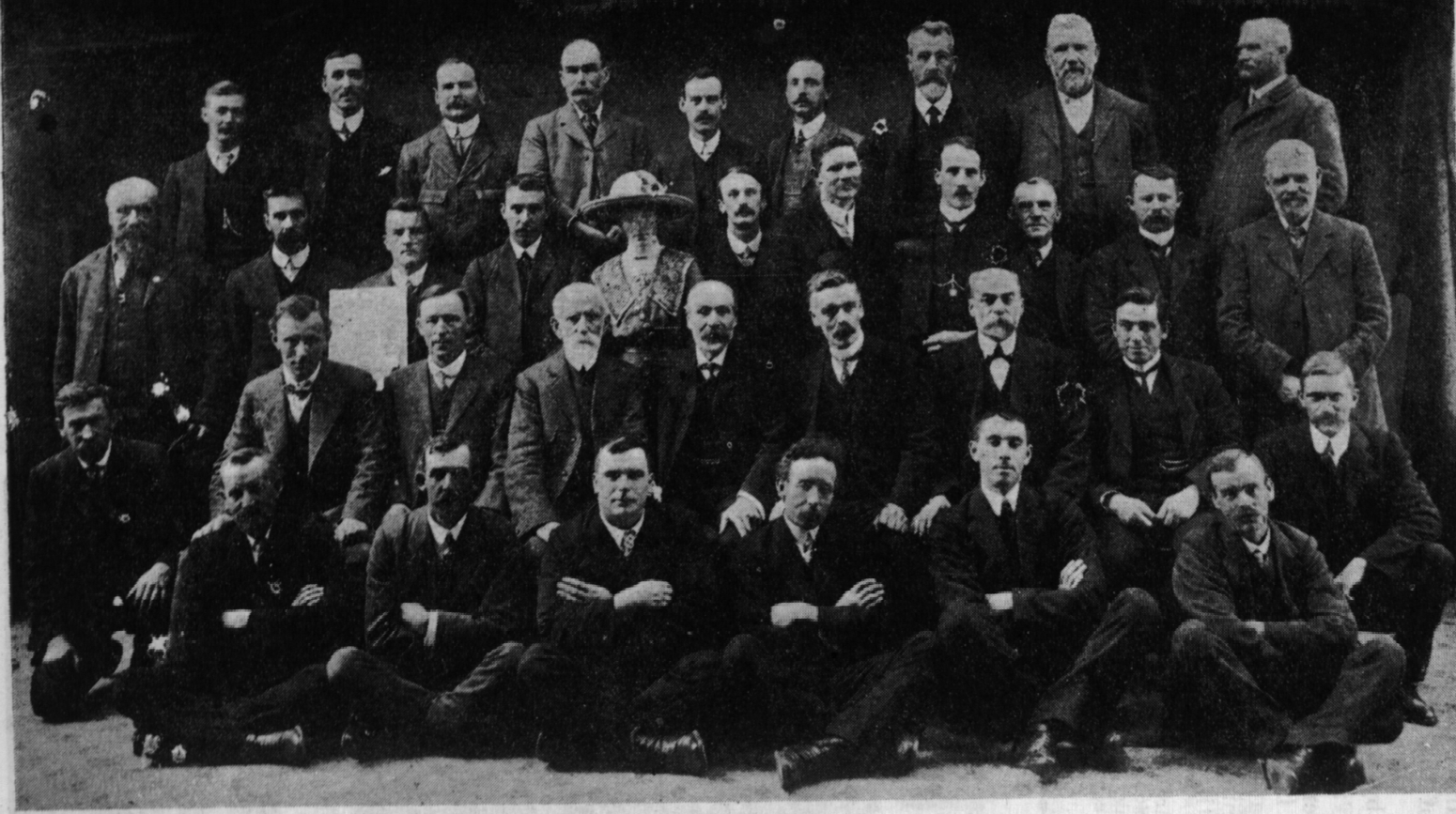
    The Hon R Heaton Rhodes placed at the value of the honey production for the Dominion just over £50,000 when he formally opened the 1914 Conference. The conference was held in the Esperanto Hall, Wellington, on 17 June. Mr James Allan (Wyndham) was re-elected President of the National Beekeepers’ Association of New Zealand. Mr JS Cotterell (Te Aroha) was re-elected Vice President. Mr HW Gilling (Taranaki), Mr S Hutchinson (Hamilton East), Mr CA Jacobsen (Little River) and Mr A Ireland (Christchurch) were on the Executive – all had been on the Executive during the previous year. Mr RW Brickell was secretary for the Association.

    ConferenceMaybe1914

    Membership stood at 256, with an expectation of doubling that number in the coming year.

    Conference debate centred on the best methods of getting good returns from exports to “Home”. A significant change to the constitution allowed for district associations to collect fees from members and remit an amount (on a sliding scale based on membership) to the National. This resulted in a sense of compromise that brought a number of other associations such as Canterbury into the ‘National’ (though the final amalgamation of the Canterbury Beekeepers’ Association, begun in 1907, did not occur until late 1916).

    The first issue of The New Zealand Beekeepers’ Journal appeared in July 1914 as a result of proposal from the conference.

    In the middle of 1914 Major AEM Norton, managing-director of the Bristol and Dominion Producers’ Association Ltd (B & D) visited New Zealand. Major Norton had previously been the Trade Commisioner in England for South Australia, and had promoted the branding by country and regularity of supply as a means of continued sales. He was so confident of being able to sell good clover honey into England that he offered to contract to the NBA for a minimum of 100 tons to a maximum of 500 tons a year for three years, on the basis of 4d FOB minimum price, with 5d being a possible return.

  • 1913

    Mr Isaac Hopkins finally left the Department of Agriculture, having effectively resigned four years previously. Approximately 40 cadets passed through the apiary during that time, mostly young women. Miss D Hart, previously in charge of the Waerenga apiary was given charge of the apiary at Ruakura.

    Total exports for the 1912-1913 season were 586 hundredweight, valued at £1,182. By the end of 1913 exports for the nine-month period were 1,690 hundredweight, valued at £3,293.

    Beekeepers had formed associations in some of the provinces. Mr Hull, then President of the Canterbury Association, suggested a conference to be held in Wellington. Being a strong trade unionist, Mr Hull proposed the name of the Federated Beekeepers’ Association of New Zealand.

    A few beekeepers from two of the main beekeeping areas of the country, Canterbury and Taranaki, had made sales of their highest grade honey into London which netted approximately 4d per pound.

    In 1913 the local Canterbury beekeepers’ association formed a co-operative association for the purpose of exporting its members’ surplus honey.

    In 1910 Mr W Lenz had extended his operations to Taranaki, but in 1913 decided to sell his Taranaki holdings. A small co-operative was formed to buy the bees to sell them out to the members in lots, and to act as a marketing operation. The New Zealand Co-op Honey Producers’ Association Ltd (HPA) was formed by HW Gilling (Matapu), HR Penny (Okaiawa), GH Buckeridge (of Eltham, the agent of the Farmers’ Co-operative Organisation Society, which handled produce for export to England on consignment), HW Warcup (Hawera), HB Nicholas (Hawera), AR Bates (Kaponga), WJ Melville (Kaponga) and CE Grainger (Te Kiri) on 17 December 1913. It was initially built around the packing operation of Mr HW Gilling in Hawera.

    There was no initial capital, with share capital being obtained by deductions from payments for honey supplied. Payments to members were financed by bank overdrafts secured by Joint and Several Guarantee for £8,000 by the Directors and by advances on honey shipped to the Company’s British agents.

    The increase in production led to talk of exports at Association meetings. In 1913 the Department of Agriculture drew up voluntary grading regulations, grading solely on colour. Mr John Montgomery, a seed merchant of Christchurch, exported some 33 tons that season to England relying on the voluntary grading regulations. The next season other firms offered a slightly better price than the 4d per pound received in 1913, and about 70 tons were exported from Canterbury. In the first year of grading, the Government graders graded 1,200 hundredweight of honey.

    In late 1913 Mr Robert Gibb resigned his position on the Executive and was replaced by the appointment of Mr CA Jackonsen (Canterbury).

  • 1911

    Early in 1911 came the first systematic effort to export surplus honey, made by the Taranaki, Canterbury and Waikato Beekeepers’ Associations. One of the immediate effects was an increase in the local price.

  • 1910

    In 1909-1910 Canterbury had a record season with average return being nearly 200 pounds per hive. Much was sold at 3d per pound and lower.

  • 1909

    Mr Isaac Hopkins left the Department of Agriculture in June 1909, but was asked to stay on to continue to do his work.

  • 1908

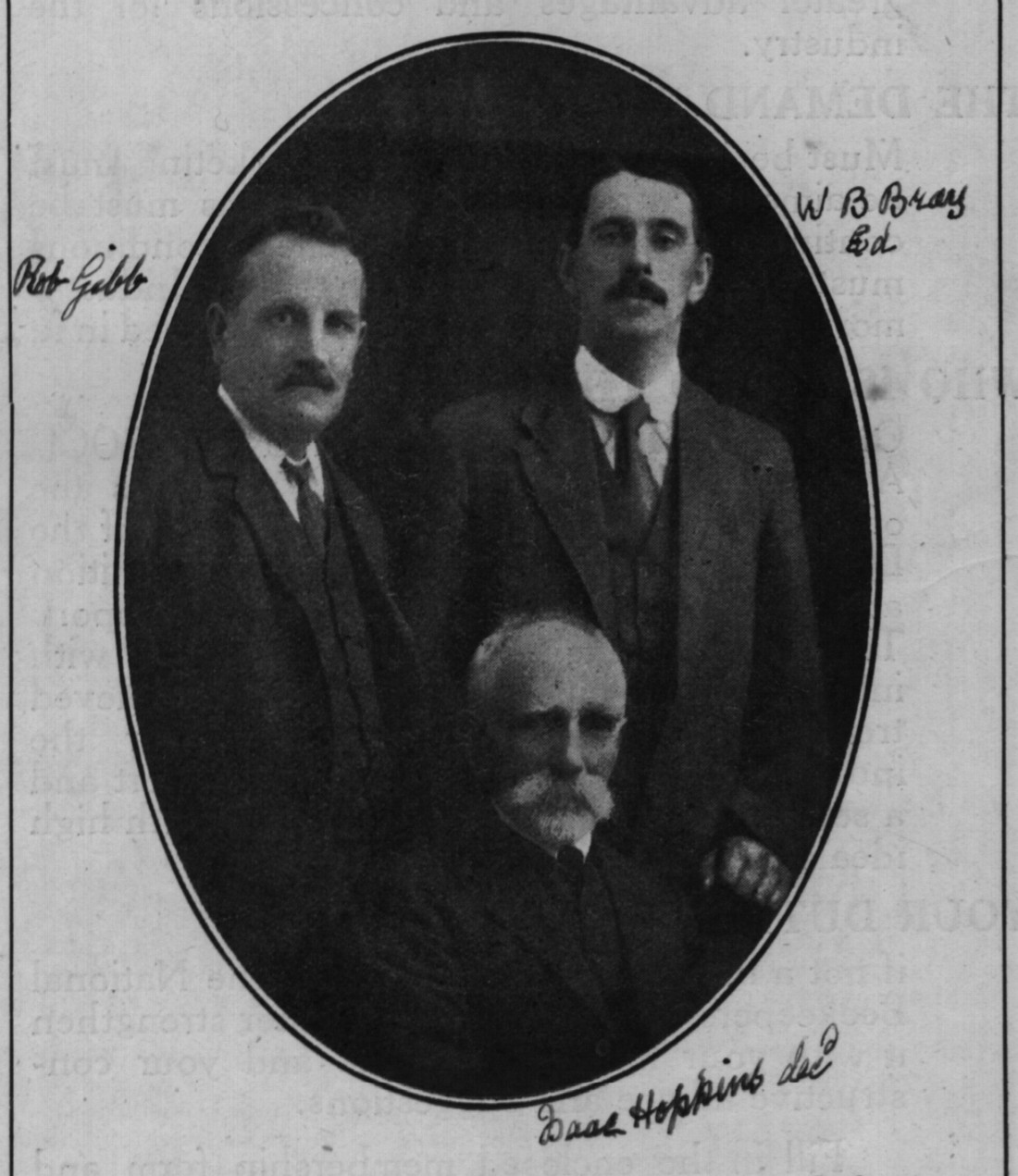
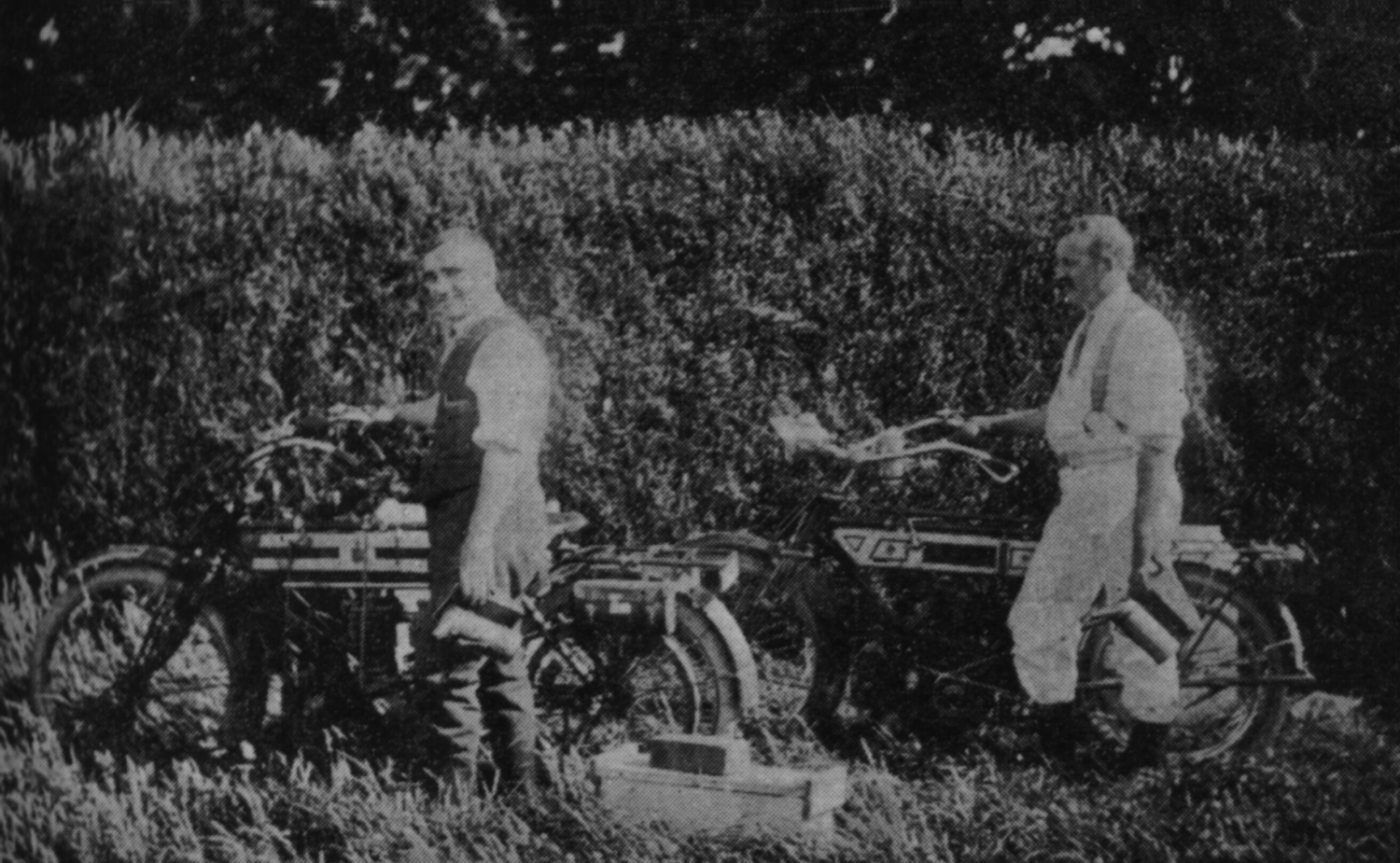
    Mr WB Bray was appointed to the position of inspector under the Act for the whole of the South Island in January 1908.  There is a widely-told story with the industry that he was issued with a bicycle and a rail pass to carry out his travels.  A contemporary photo makes it more likely it was a motorcycle of sorts.

    GibbBrayHopkins1907

    ApiaryInspectors

  • 1907

    While there were few fully commercial apiarists in New Zealand, one unnamed beekeeper did produce a crop of 32 tons in 1907, according to Mr R Gibb when opening the 1930 NBA Conference.

    Mr I Hopkins persuaded the Minister to introduce a new Apiaries Act in 1907 to replace the 1906 Act which had been changed in the House. A new clause was added naming a deadline date after which the use of box hives would become illegal.

    The 1907 Exhibition in Christchurch contained a model apiary conducted by Mr Isaac Hopkins. It created much interest, not only in beekeeping but in honey itself. Honey began to be more ‘saleable’.

    While both Miss Livesay and Mr Hopkins were with the model apiary at the Christchurch Exhibition in late 1906 and early 1907, American foulbrood again spread through the apiary.

    In 1907 Mr Fletcher Branthwaite of Tai Tapu sold his farm and bees to return to England. He took some 10 tons of honey with him. After several years he still had not managed to sell it and ultimately had the remainder sent back to him after he returned to New Zealand. Honey was not considered a readily merchandisable article, even high quality clover honey.

    Most honey for the Auckland market came from Great Barrier Island, and was sold in 2-pound tins, nicely labelled with the owner’s name and address. The honey was strongly flavoured and varied from the white of pohutukawa to the dark of manuka. A few shops stocked well packed lines from the few commercial beekeepers in the Waikato, medium amber and strongly flavoured with pennyroyal or manuka.

    At the southern end of the North Island were two large producers. Mr J Walworth of Palmerston North and Mr William Lenz of Masterton each produced crops ranging up to 30 tons.

  • 1906

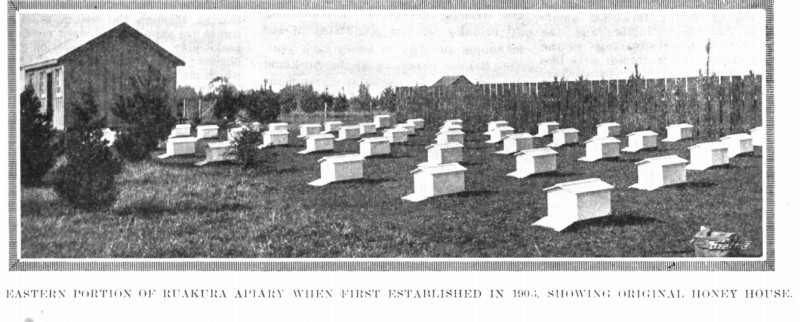
    The first honey house at the Ruakura Farm of Instruction was built in 1906 at a cost of £45. Miss Lena Livesay, assistant to Mr I Hopkins, commenced duties as manageress of the Ruakura apiary in January.

    Mr Seddon decided to foster small holdings production in 1906 with the passing of the first Apiaries Act. He appointed a viticulturist, a fruit-canning expert, a poultry, and a bee expert – who was Mr Isaac Hopkins.

  • 1905

    In June, Mr Isaac Hopkins, recently appointed apiarist to the Department of Agriculture, established an apiary at the Ruakura Farm of Instruction, near Hamilton. Though there had been some hives there in 1904 and in 1905 in both instances they had been destroyed by foulbrood.

    Ruakura1905