Category: 1910-1919

  • 1919

    With the Armistice in late 1918, NZ beekeepers turned once more toward peacetime activities. Elements of sadness continued in the magazine, however, as the influenza epidemic took its toll of the civilian population. The Editor apologised for the lateness of some of his correspondence as he had been placed in charge of a temporary hospital in the Katikati district, while his home had been used as a nurses’ home.

    Discussions on the desirability of apiary boundries continued in the magazine. The call for licensing of beekeepers and/or sites was strong, but there was no concensus on achieving the desired end of stability in the siting of apiaries.

    Mr HW Gilling, Manager of the HPA, wrote to thank beekeepers for their favourable response in the calling up of subscribed but unpaid capital. He commented that with the war over, the honey in store should soon reach England. He remained confident that the prices being obtained would remain near the same for honey supplied.

    The HPA had handled between 450 and 500 tons of honey during the previous year. The number of shareholders had increased to 412. Subscribed capital was up from £4,510 to £6,716, while paid up capital rose from £849 to £3,631. Operations had been moved from Taranaki to centre on Auckland to make handling of honey somewhat easier.

    By late January prices in England had already begun to slide, with honey having dropped from the high of £200 per ton achieved in 1918 down to £100. Rather than an average return of £150 as the Editor had predicted in the January issue, by March he was suggesting a return of only half of that.

    In March Mr J Rentoul, Chairman of Directors for NZHPA announced the replacement of Mr HW Gilling with Mr CF Ryland as Manager of the HPA. Mr Gilling had resigned but was still planning to stand for the Directorate of the company, though he did not eventually decide to do that.

    The Editor of the magazine produced a small booklet titled “Beekeeping for Beginners” which was available to all NBA members and any new members who joined the NBA.

    Mr H Bartlett Bartlett-Miller of Kihikihi continued to provide a two page advertisement for the magazine extolling the virtues of his patented comb reducer. Mr Bartlett-Miller was very outspoken about the advantages and features of his invention, and spared no prose in describing the shortcomings of anyone who disagreed with him!

    Mr C Smedley of Te Awamutu was also a manufacturer of melters, and a series of competing advertisements featured in the magazine over an extended period of time.

    The Sixth NBA Conference was held in Wellington in the Dominion Farmers’ Institute, Featherson Street, starting on 11 June 1919. Mr James Allan (Tasman, Nelson) was elected President with Mr W Watson (Geraldine) as Vice President. Mr R McKnight (Domett), Mr HR Penny (Okaiawa), Mr AH Davies (Claudelands) and Mr JB Adams (Gisborne) were elected to the Executive

    A letter appeared in the August issue of the Journal from Mr Allan R Bates, formerly of Kaponga. Mr Bates had served in the War and appears to have remained in England for the period following, planning to return later in the year. He described cycling out to visit the beekeeping operation at Buckfast Abbey, and he described the operation as “up to date as any that I have ever seen at home”.

    The packaging of honey in petrol tins (used!) for export was finally discontinued by order of Mr TW Kirk, Director of the Horticulture Division. The allowance had been made for the last year or two due to the lack of tin plate, provide that proper lids were fitted to the petrol tins.

    The October issue of the magazine featured a photograph of the NBA President, Mr James Allan. He was first elected President in 1913, the first president under the new constitution. He served as President again in 1914, and as Vice President in 1918, then President again in 1919.

    The Editor carried out an acrimonious exchange with Mr WB Bray late in 1919 in the pages of the magazine. The Editor, having the final word, returned Mr Bray’s 5/- magazine subscription and told him that he, too, was sorry that he had sent in a subscription!
  • 1918


    The first issue of the NZ Beekeepers’ Journal for 1918 provided a change in type size and layout (now using two columns of text). With a reduction in page numbers from 20 to 16, the Editor assured readers there were in fact more than 2 pages more equivalent reading material than the previous journal.

    Two of the honey graders Mr Earp and Mr Jacobsen had received a call to report to military camp in April. The Editor appealed for an extension to June to enable them to grade this year’s honey crop before joining the war effort. As it turned out, Mr Earp did not need the extension – he did not pass the physical.

    Mr AL Luke of Awakeri, Bay of Plenty, described a variety of honey poisoning incidents. He noted that the honey was gathered in the autumn, and the poison appeared to come from unripe honey extracted then.

    In April 1918, Mr HW Gilling found it necessary to resign as Vice President of the NBA. He did this on a matter of principle, as he objected to the NBA’s journal running an advertisement for a company offering to buy honey for export in competition to the HPA with which he was associated closely. At a meeting in July of the HPA he took the new position of general manager of the HPA at a salary of £400.

    High prices for the 1918 crop both locally and for export put pressure on HPA shareholders. Many shareholders were selling for short-term profit outside of their organisation and contrary to their contract with the HPA. There was considerable fluctuations even over short periods of time in the prices obtained for honey. The HPA in June was paying 9d per pound when the honey was shipped. With difficulties getting shipping space, however, producers were receiving the in-store advance of 5 ½ d on light amber honey, with the rest to come when the honey was finally shipped to England.

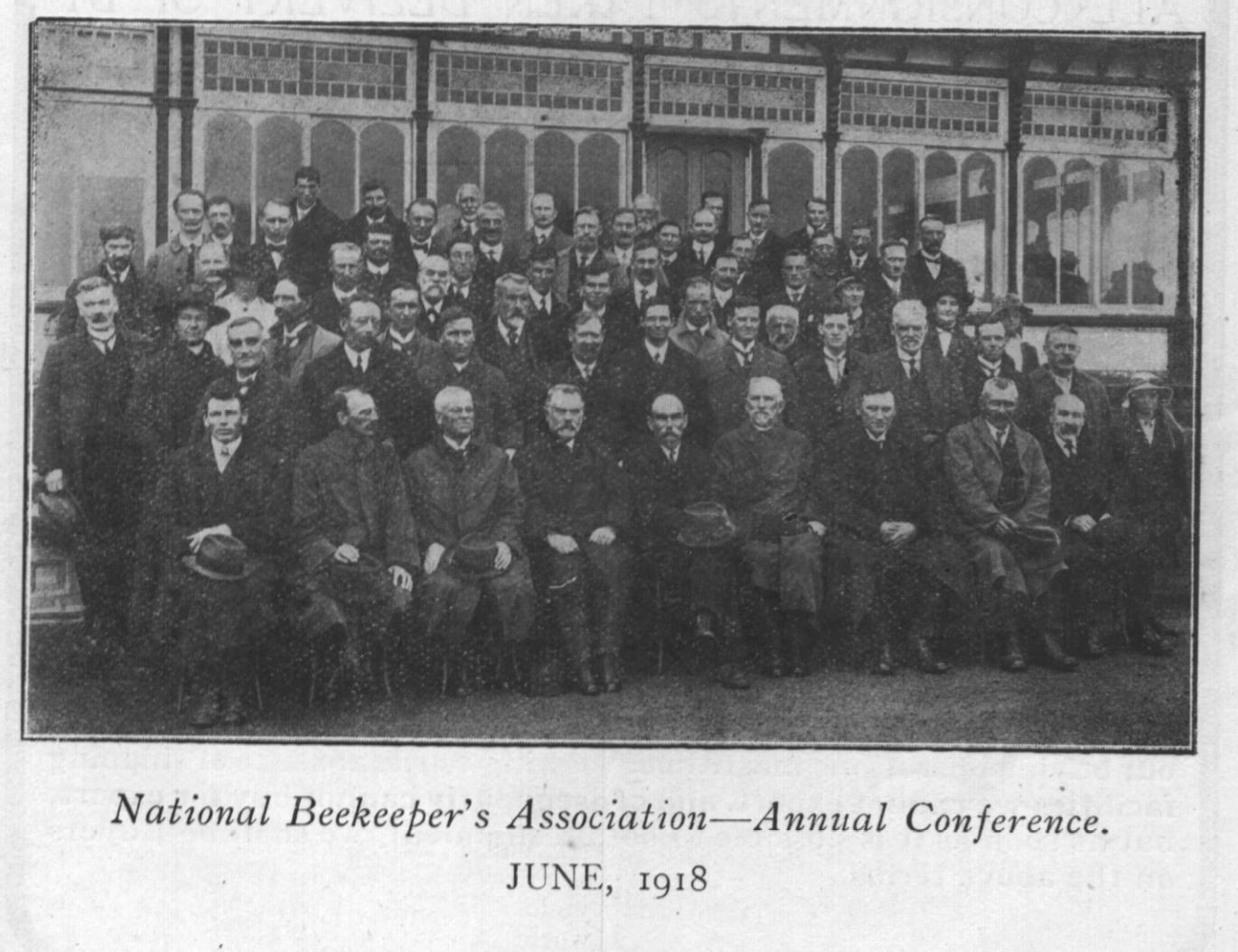
    The Fifth Annual Conference was held on 13 and 14 June 1918 in the Esperanto Hall, Wellington. It was opened by Hon WDS Macdonald, the Minister of Agriculture, and was one of the largest and most enthusiastic held to date. During the Conference a delegation was sent to the Minister to ask for appointment of a Chief Apiarist, a man capable of organising the industry and getting the best results possible from beekeepers, though shortly after Conference the industry was advised that the suggestion was considered “impracticable”.

    WellingtonConf1918

    The Minister also promised his assistance in obtaining shipping space for the 300 tons of honey the HPA had accumulated in shipping stores. He would cable the Prime Minister and Sir Joseph Ward who were in London to point out the advantages of ensuring the honey was shipped promptly.

    Mr WE Barker (Peel Forest) was re-elected as President, with Mr James Allan (Tasman) as Vice President. Executive for the coming year were Mr RH Nelson (Martinborough), Mr EW Sage (Ohaupo), Mr A Ireland (Christchurch) and Mr W Watson (Geraldine). Mr FC Baines remained as Secretary and Editor, and his salary was increased by £26, as well as receiving an immediate £10 bonus!

    In the September issue of the Journal the Editor made some scathing remarks about Mr FA Jacobsen, the apiary instructor for the Wellington district. Mr Jacobsen had failed the physical required for military service and put his name forward to be considered for the position of Chief Apiarist. The Editor felt he was taking unfair advantage over two other contenders for the position who were both serving their country overseas. In the next issue of the Journal, the Editor retracted and corrected many of the statements, upon the advice of Mr Jacobsen’s solicitors!

  • 1917

    Mr WB Bray took over the duties of Editor and Executive Secretary early in 1917. In an editorial in April, he spoke against the practice of tolerating American foulbrood levels in commercial bee businesses, saying “We are inclined to think that the greatest problem the inspectors have to face now is getting the frame-hive beekeeper to give up tinkering with disease and tackle the problem of eradication in a whole-hearted way…The man who has had foul-brood and has eradicated it, not merely kept it down, is the best authority…There are districts that have been cleaned up, and have remained clean so far, and we cannot see why these districts cannot be extended, so that the inspectors gradually have less and less ground to cover.”

    By early 1917 there appeared to be some problems in obtaining shipping space for honey to England, but the B & D continued to receive honey into grade stores to hold until shipping could be obtained. With sugar under control in England honey prices soared, and the HPA payed out as high as 8 1/3 pence per pound late in 1917.

    The HPA was in the process of extending its activities further with the acquisition of a manufacturing plant, the Alliance Box Company’s business in Dunedin. In dividing the profits of the HPA, all profits are pooled. If a trading surplus resulted from such things as was, bees supplies and other lines, it was used to improve the payout for honey. The turnover of the company had increased from £2,000 in 1914, to £6,700, to £8,600 in 1916. It expected the 1917 turnover to reach £12,000. Subscribed capital at the end of 1916 was £3,112, and had been increased to £3,000 by April of 1917, with over 50 new shareholders since the end of 1916.

    By early 1917 the NBA had still not been registered under the Unclassified Societies Act, as the Registrar refused to register the Association. He objected to the reference to Branches in the constitution.

    In March the Journal commented on the fact that the Department of Agriculture had provided one of the apiary instructors with a “five-seater motor car”. The extravagance went against economical grain of the Editor, who commented that a two-seater would have been large enough.

    The Apiaries Division took direct control of the Ruakura Apiary, with a manager appointed to conduct a programme of practical experiments and demonstrations.

    The crop for the year was estimated at 1,250 tons, with a value of £60,000 (at 5d per pound). Prices for export had advanced so that £70 per ton was guaranteed for honey of A grade and light amber B grade. The HPA was advancing 4 3/4 d per pound on those two grades.

    The fourth Annual General Meeting of the NBA and the Annual Conference of the beekeepers of the Dominion was opened in Edmanson’s Hall In Wellington on 6 June 1917, with Mr J Rentoul in the chair. Mr WB Bray, the Secretary, had been called up to military camp just a week before Conference, and had not been able to complete all the arrangements for the meetings. The Secretary of the Department of Agriculture Mr FS Pope opened the proceedings.

    Mr J Allen of Southland proposed a change to the export regulations to allow for the export of granulated honey in boxes similar to butter. He had been using white pine and kauri boxes for six years for the Dunedin market and had found them to be equal in quality but cheaper than tin. The box would hold 64 pounds of honey, and it was suggested that the honey could be cut into ‘pats’ and sold wrapped in parchment as Mr Allen was doing for his markets.

    Once again Conference called for the registration of apiaries to be brought into force. A delegation of beekeepers to the Director of Horticulture on the last day of Conference reported that he felt favourable to the idea and proposed to require bees to be registered by July 31 and every three years thereafter.

    The Government provided a pound for pound subsidy to the Association for subscriptions paid by members, resulting in total income for the year of £290 18 6.

    Elections resulted in a new NBA President following the retirement of Mr Rentoul, Mr WE Barker (Rangitata), with Mr HW Gilling (Hawera) elected as Vice President. Executive members were Mr RH Nelson (Martinborough) Mr EW Sage (Ohaupo), Mr J Rentoul (Cheviot) and Mr RW Brickell (Dunedin). Mr FC Baines (Katikati) became Secretary/Treasurer and Editor of the magazine.

    At the conclusion of the war the stocks where shipped to England (Avonsmouth, the modernised port in Bristol promoted by the B and D). In the meantime, however, the sales of (cheaper) Australian and Californiana honey and corn syrup and the like had created a consumer resistance. This combined with a reduced buying power immediately after the war to create an unanticipated situation. Some of the NZ honey in store had fermentation problems, as well, later blamed on tiny splits at the corners in the tops of the tins being used.

    The Bristol and Dominion Producers’ Association Ltd went into liquidation, still holding considerable stocks of Association honey. The HPA then had two season’s honey in stock and an overseas market with low consumption due to poor quality honey put on the market during the war, stocks of which were still held by the retailers at prices around 3/6 per pound.

  • 1916

    Mr Cottrell, the NBA President, was not able to preside at the 1916 conference due to the necessity for a major operation. The Vice President Mr J Rentoul was in the chair in his place. One resolution called for the Department of Agriculture to enforce the registration of apiaries. The required legislation had been passed seven years before but no action had been taken in the interim. Another resolution of conference called for the registration of the Association under the Unclassified Societies’ Act and the adoption of a uniform constitution throughout the branches.

    Mr J Rentoul was elected as President for the next year at the conclusion of conference, with Mr WE Barker as Vice President. Executive members were Mr HR Penney, Mr EW Sage, Mr A Ireland and Mr WB Bray. Mr RW Brickell remained as secretary, in spite of advertisements for the position that had appeared in previous magazines.

    Almost every issue of the magazine described methods of ‘curing’ American foulbrood. Transferring to foundation, removing the queen, cutting out infected cells, the McEvoy, Clayton, Cotterell, Hobbs and Baldridge methods – all variations had their adherents. It is clear that foulbrood was still causing major problems to the industry, even with the reduction in the number of box hives.

    In September Mr AB Trythall was placed in charge of the apiary at Ruakura Farm of Instruction. Over the next few years over 200 cadets received tuition in commerical beekeeping, including 108 returned soldiers, 20 returned nurses, 15 male civilians and 69 female civilians.

    By the end of 1916 the HPA had several hundred shareholders. Honey exports to the B & D, however, fell 30 tons short of the required 100 ton minimum. Major Norton of the B & D expressed concern, but the company did not take action under the contract that it was entitled to (purchasing a quantity of honey equal to the shortage or recovering damages from the HPA). Major Norton had experienced increased costs and difficulty of obtaining glass containers for packing. In an innovative move, he substituted cardboard containers, which became preferred once the public became used to them.

    Both light and dark honeys were accepted by the B & D for sale in England, with all grades realising similar prices. The lighter coloured honey was sold in the southern cities. The darker honey was sold in the north as New Zealand heather honey until the Agricultural Department stepped in to announce that there is no heather in the Dominion! “What harm could it do anyone when we call the honey obtained from the native weeds heathers, flaxes, and manukas, &c., heather honey?” the Editor of the magazine argued.

    In late 1916 Mr WB Bray wrote an article for the magazine asking for ‘Co-operation’. With a small crop the previous season, he analysed, if all the honey had been sent to England the local market prices would have soared. This would have resulted in a windfall for the non-HPA members and worked against longer term market stability. He urged HPA members who received word of high local prices being offered to turn the offer over to the HPA to supply rather than filling it individually. He concluded the article “We want to ride in a motor car too some day.”

    In November 1916 the Association Secretary Mr RW Brickell found it necessary to hand in his resignation as secretary owing to an early departure from the Dominion on business. A new secretary was to be appointed before the end of the year, with the position advertised at £25 per year.

  • 1915

    While the NBA did not take up Major Norton’s offer, the NZ Co-op Honey Producers’ Association did. Possible returns of 5d per pound, £46 per ton, were talked of. The HPA agreed to increase authorised capital to £3000 and accept other shareholders, enabling it to enter into the contract with the Bristol and Dominion Producers’ Association in 1915 to supply 100 tons of first-grade honey per year for a period of three years.

    Patriotic beekeepers were urged to contribute honey for “the distressed poor of the Homeland” early in the year.

    In 1915 the grading regulations became compulsory. Exports increased, and the ‘respectability’ of the product led to confidence and increased prices on the local market.

    Mr JS Cottrell (Te Aroha) was elected President at the 1915 Conference in Wellington, with Mr J Rentoul (Cheviot) as Vice President. Executive members elected were Mr AC Askew (Manakau), Mr RJH Nicholas (Hawera), Mr WF Barker (Peel Forest) and Mr WB Bray (Banks Peninsula). Mr RW Brickell remained as Secretary, though by early in the following year an advertisement appeared asking for applications to replace him in June 1916.

    By late 1915 upwards of 106 tons of honey had been exported to Bristol, in spite of it being a particularly poor season. Major Norton was less than satisfied with the quality of the honey, referring to it as “lovely rubbish”, and writing: “They do not mind an occasional bee corpse, but would prefer rather a smaller quantity in future.”

    At some point in 1915, the first “Acorn” process foundation factory was established.

  • 1914

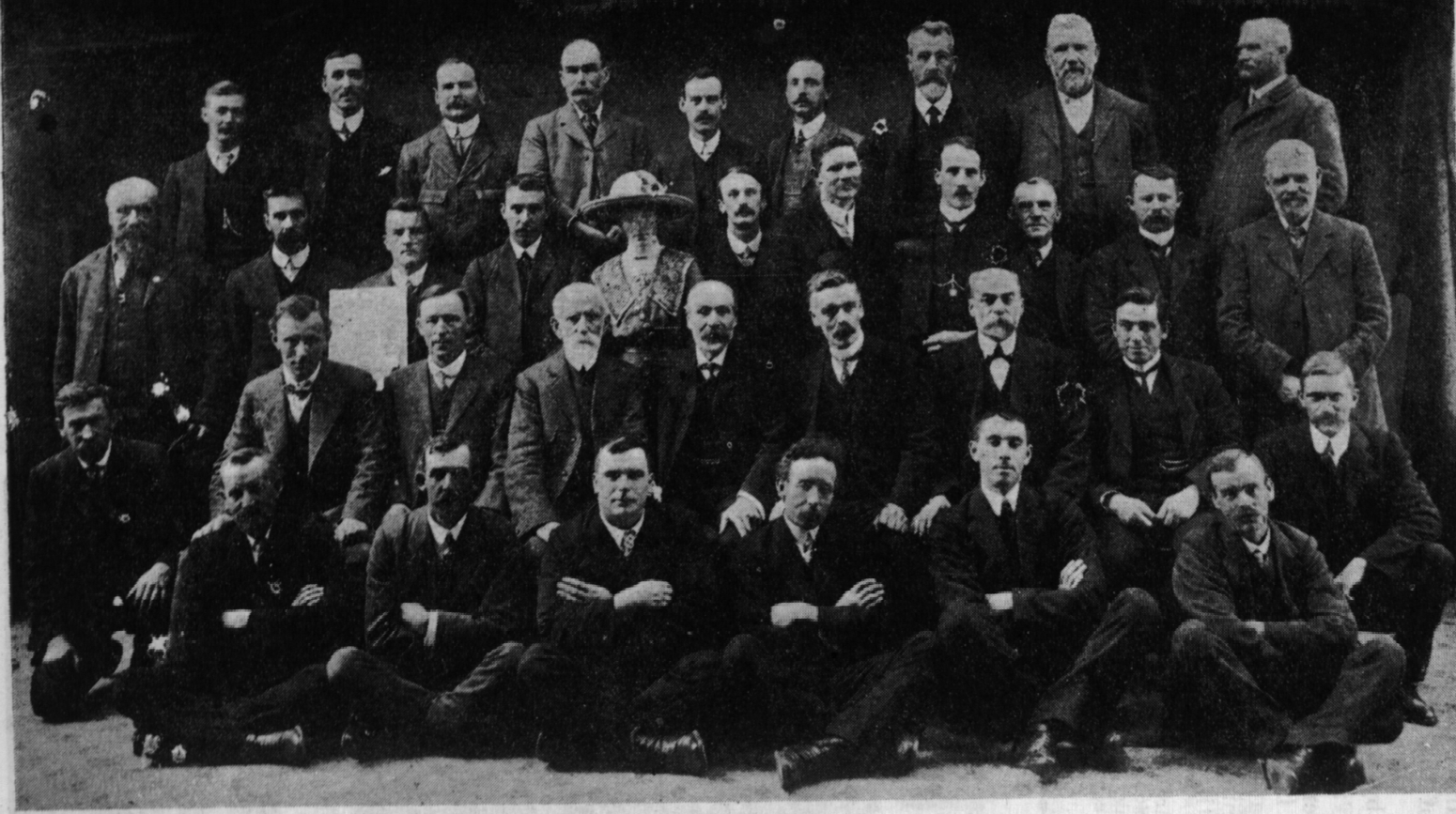
    The Hon R Heaton Rhodes placed at the value of the honey production for the Dominion just over £50,000 when he formally opened the 1914 Conference. The conference was held in the Esperanto Hall, Wellington, on 17 June. Mr James Allan (Wyndham) was re-elected President of the National Beekeepers’ Association of New Zealand. Mr JS Cotterell (Te Aroha) was re-elected Vice President. Mr HW Gilling (Taranaki), Mr S Hutchinson (Hamilton East), Mr CA Jacobsen (Little River) and Mr A Ireland (Christchurch) were on the Executive – all had been on the Executive during the previous year. Mr RW Brickell was secretary for the Association.

    ConferenceMaybe1914

    Membership stood at 256, with an expectation of doubling that number in the coming year.

    Conference debate centred on the best methods of getting good returns from exports to “Home”. A significant change to the constitution allowed for district associations to collect fees from members and remit an amount (on a sliding scale based on membership) to the National. This resulted in a sense of compromise that brought a number of other associations such as Canterbury into the ‘National’ (though the final amalgamation of the Canterbury Beekeepers’ Association, begun in 1907, did not occur until late 1916).

    The first issue of The New Zealand Beekeepers’ Journal appeared in July 1914 as a result of proposal from the conference.

    In the middle of 1914 Major AEM Norton, managing-director of the Bristol and Dominion Producers’ Association Ltd (B & D) visited New Zealand. Major Norton had previously been the Trade Commisioner in England for South Australia, and had promoted the branding by country and regularity of supply as a means of continued sales. He was so confident of being able to sell good clover honey into England that he offered to contract to the NBA for a minimum of 100 tons to a maximum of 500 tons a year for three years, on the basis of 4d FOB minimum price, with 5d being a possible return.

  • 1913

    Mr Isaac Hopkins finally left the Department of Agriculture, having effectively resigned four years previously. Approximately 40 cadets passed through the apiary during that time, mostly young women. Miss D Hart, previously in charge of the Waerenga apiary was given charge of the apiary at Ruakura.

    Total exports for the 1912-1913 season were 586 hundredweight, valued at £1,182. By the end of 1913 exports for the nine-month period were 1,690 hundredweight, valued at £3,293.

    Beekeepers had formed associations in some of the provinces. Mr Hull, then President of the Canterbury Association, suggested a conference to be held in Wellington. Being a strong trade unionist, Mr Hull proposed the name of the Federated Beekeepers’ Association of New Zealand.

    A few beekeepers from two of the main beekeeping areas of the country, Canterbury and Taranaki, had made sales of their highest grade honey into London which netted approximately 4d per pound.

    In 1913 the local Canterbury beekeepers’ association formed a co-operative association for the purpose of exporting its members’ surplus honey.

    In 1910 Mr W Lenz had extended his operations to Taranaki, but in 1913 decided to sell his Taranaki holdings. A small co-operative was formed to buy the bees to sell them out to the members in lots, and to act as a marketing operation. The New Zealand Co-op Honey Producers’ Association Ltd (HPA) was formed by HW Gilling (Matapu), HR Penny (Okaiawa), GH Buckeridge (of Eltham, the agent of the Farmers’ Co-operative Organisation Society, which handled produce for export to England on consignment), HW Warcup (Hawera), HB Nicholas (Hawera), AR Bates (Kaponga), WJ Melville (Kaponga) and CE Grainger (Te Kiri) on 17 December 1913. It was initially built around the packing operation of Mr HW Gilling in Hawera.

    There was no initial capital, with share capital being obtained by deductions from payments for honey supplied. Payments to members were financed by bank overdrafts secured by Joint and Several Guarantee for £8,000 by the Directors and by advances on honey shipped to the Company’s British agents.

    The increase in production led to talk of exports at Association meetings. In 1913 the Department of Agriculture drew up voluntary grading regulations, grading solely on colour. Mr John Montgomery, a seed merchant of Christchurch, exported some 33 tons that season to England relying on the voluntary grading regulations. The next season other firms offered a slightly better price than the 4d per pound received in 1913, and about 70 tons were exported from Canterbury. In the first year of grading, the Government graders graded 1,200 hundredweight of honey.

    In late 1913 Mr Robert Gibb resigned his position on the Executive and was replaced by the appointment of Mr CA Jackonsen (Canterbury).

  • 1911

    Early in 1911 came the first systematic effort to export surplus honey, made by the Taranaki, Canterbury and Waikato Beekeepers’ Associations. One of the immediate effects was an increase in the local price.

  • 1910

    In 1909-1910 Canterbury had a record season with average return being nearly 200 pounds per hive. Much was sold at 3d per pound and lower.