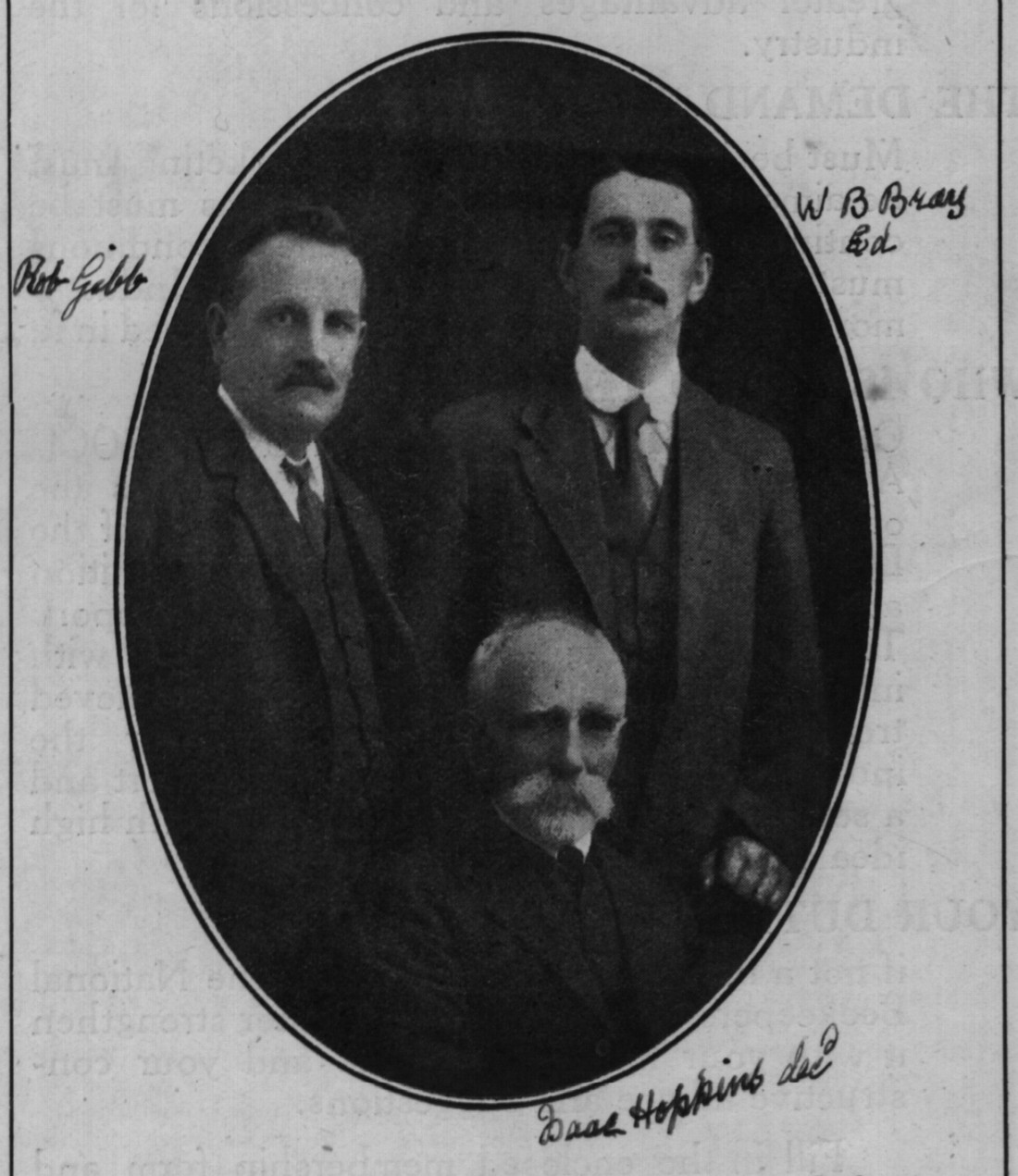
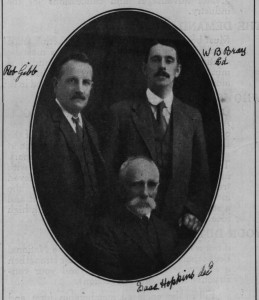
Mr Isaac Hopkins left the Department of Agriculture in June 1909, but was asked to stay on to continue to do his work.
Category: 1900-1909
-
1908
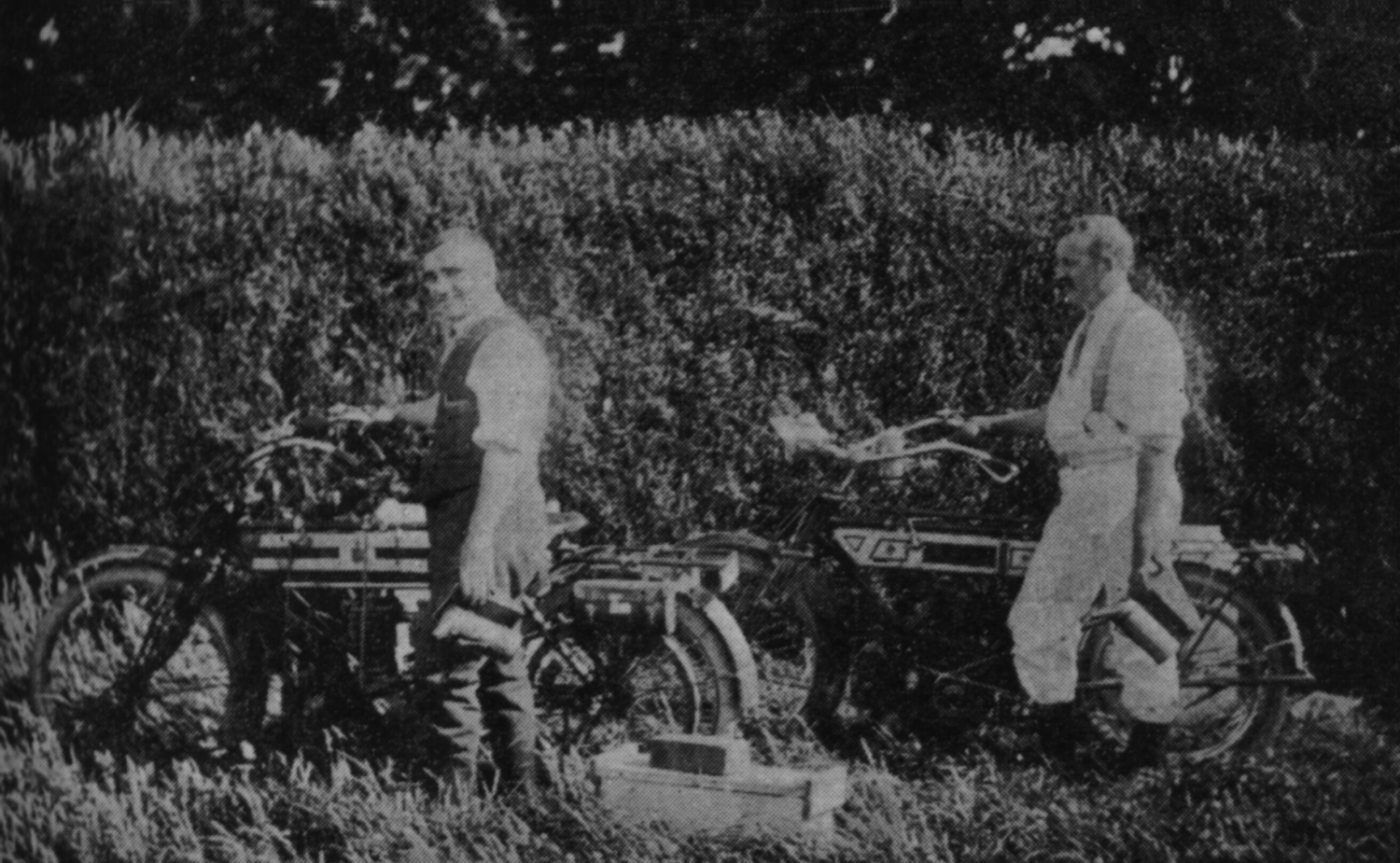
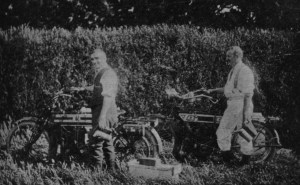
Mr WB Bray was appointed to the position of inspector under the Act for the whole of the South Island in January 1908. There is a widely-told story with the industry that he was issued with a bicycle and a rail pass to carry out his travels. A contemporary photo makes it more likely it was a motorcycle of sorts.
-
1907
While there were few fully commercial apiarists in New Zealand, one unnamed beekeeper did produce a crop of 32 tons in 1907, according to Mr R Gibb when opening the 1930 NBA Conference.
Mr I Hopkins persuaded the Minister to introduce a new Apiaries Act in 1907 to replace the 1906 Act which had been changed in the House. A new clause was added naming a deadline date after which the use of box hives would become illegal.
The 1907 Exhibition in Christchurch contained a model apiary conducted by Mr Isaac Hopkins. It created much interest, not only in beekeeping but in honey itself. Honey began to be more ‘saleable’.
While both Miss Livesay and Mr Hopkins were with the model apiary at the Christchurch Exhibition in late 1906 and early 1907, American foulbrood again spread through the apiary.
In 1907 Mr Fletcher Branthwaite of Tai Tapu sold his farm and bees to return to England. He took some 10 tons of honey with him. After several years he still had not managed to sell it and ultimately had the remainder sent back to him after he returned to New Zealand. Honey was not considered a readily merchandisable article, even high quality clover honey.
Most honey for the Auckland market came from Great Barrier Island, and was sold in 2-pound tins, nicely labelled with the owner’s name and address. The honey was strongly flavoured and varied from the white of pohutukawa to the dark of manuka. A few shops stocked well packed lines from the few commercial beekeepers in the Waikato, medium amber and strongly flavoured with pennyroyal or manuka.
At the southern end of the North Island were two large producers. Mr J Walworth of Palmerston North and Mr William Lenz of Masterton each produced crops ranging up to 30 tons.
-
1906
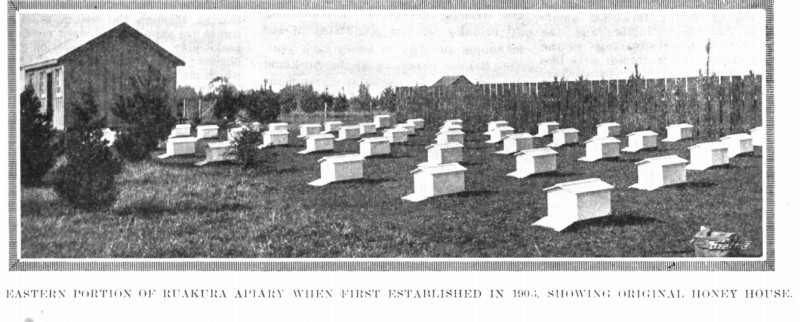
The first honey house at the Ruakura Farm of Instruction was built in 1906 at a cost of £45. Miss Lena Livesay, assistant to Mr I Hopkins, commenced duties as manageress of the Ruakura apiary in January.
Mr Seddon decided to foster small holdings production in 1906 with the passing of the first Apiaries Act. He appointed a viticulturist, a fruit-canning expert, a poultry, and a bee expert – who was Mr Isaac Hopkins.
-
1905
In June, Mr Isaac Hopkins, recently appointed apiarist to the Department of Agriculture, established an apiary at the Ruakura Farm of Instruction, near Hamilton. Though there had been some hives there in 1904 and in 1905 in both instances they had been destroyed by foulbrood.